Case Study

  • Comparison of a man's back before and after physical therapy, showing improved posture and muscle condition. Left image labeled '1st Visit,' right labeled '2nd Visit', with red vertical and horizontal lines indicating posture changes.

    Case Study [EP.1]

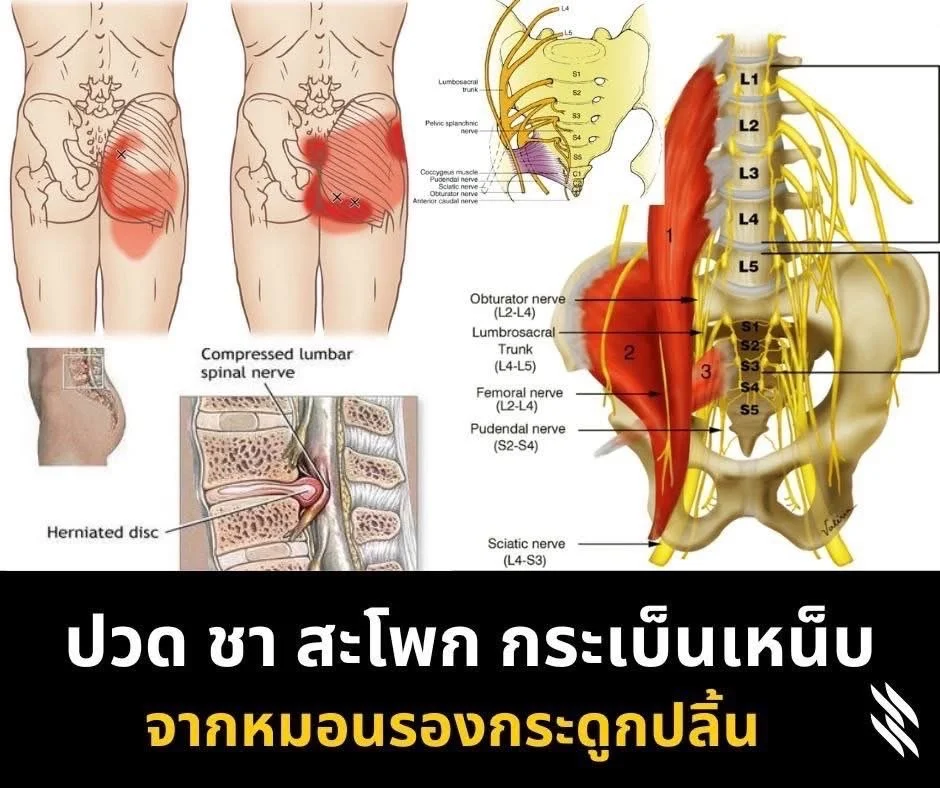
    หมอนรองกระดูกทับเส้น ปวดหลัง ร้าวลงขา แต่ยังใช้ชีวิตได้ จนคิดว่าไม่เป็นไร

  • Diagram of lower back and pelvic nerve anatomy with highlighted areas indicating pain points, including herniated disc, compressed lumbar spinal nerve, and pain radiating to the thigh and protruding from the lower back, with Thai text at the bottom translating to "Pain in the back, thigh, thigh, and hip from herniated disc."

    Case Study [EP.2]

    ปวดสะโพก กระเบ็นเหน็บ
    จากหมอนรองกระดูกปลิ้น 

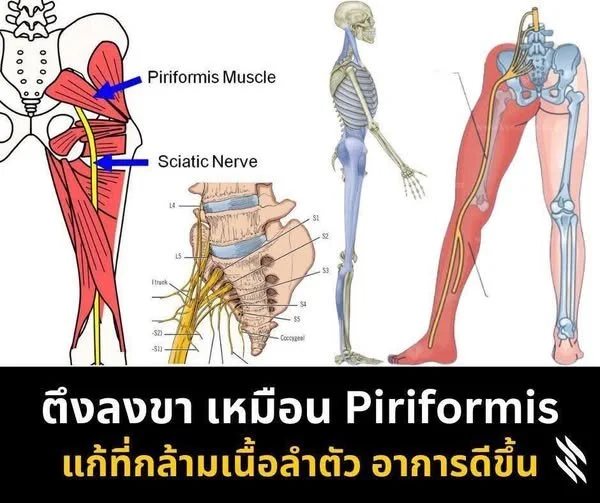
  • Diagram of the piriformis muscle and sciatic nerve in the human body, with a skeletal figure showing nerve pathway, and light-colored muscles illustrating anatomy, accompanied by Thai text explaining muscle relief.

    Case Study [EP.3]

    มีอาการตึงสะโพก ตึงขาจนถึงปลายเท้า
    ตึงซีกซ้ายทั้งตัว

  • X-ray of a spine and four images showing the change in back curvature measurements over time with a care method, displaying reduced curvature from 11 to 7 degrees and 9 to 7 degrees.

    Case Study [EP.4]

    แนวทางการรักษากระดูกสันหลังคดในเด็ก

  • Diagram illustrating the body's postural control system, including input from the eyes, inner ear, and muscles, with visual references to head movement, pain, and nose. Text in Thai discusses headaches and dizziness.

    Case Study [EP.5]

    ปวดหัวเหมือนมีอะไรทับ เวียนหัว บ้านหมุน

  • A woman holding her head in pain next to a large crack in the ground from an earthquake, with Thai text about feeling like the house is still shaking after an earthquake.

    Case Study [EP.6]

    แรงสั่นสะเทือนถึงไทย – หลายคนยังเวียนหัวไม่หาย

  • An infographic illustrating different types of headache pain, including sinus pain, tension headache, and migraine, with a human head depicted in three stages of discomfort. It also features a skeletal diagram of the human body and a woman with a pained expression, pointing to her head. The text explains that headaches can improve after massaging the forehead and neck.

    Case Study [EP.7]

    ปวดคอ ร้าวขึ้นหัวอีก มันใช่ไมเกรนจริงหรอ?

  • A collage showing a woman performing vision testing with eye charts, a woman undergoing a vision test, and a person doing a balance exercise on a scale. The bottom caption in Thai reads: 'What is in this picture? Troublesome vision, fatigue, dizziness, head, and neck pain.'

    Case Study [EP.8]

    หน้าฝน... แค่เดินช้าก็โคลงได้!

  • MRI scan of a human neck and spine on the left, diagrams of upper limb dermatomes on the right, and Thai text at the bottom indicating nerve pain related to shingles affecting shoulder and arm muscles.

    Case Study [EP.9]

    ปวดตึงสะบัก ชาร้าวลงแขน สุดท้าย…
    หมอนรองกระดูกคอปริ้นทับเส้นประสาท!

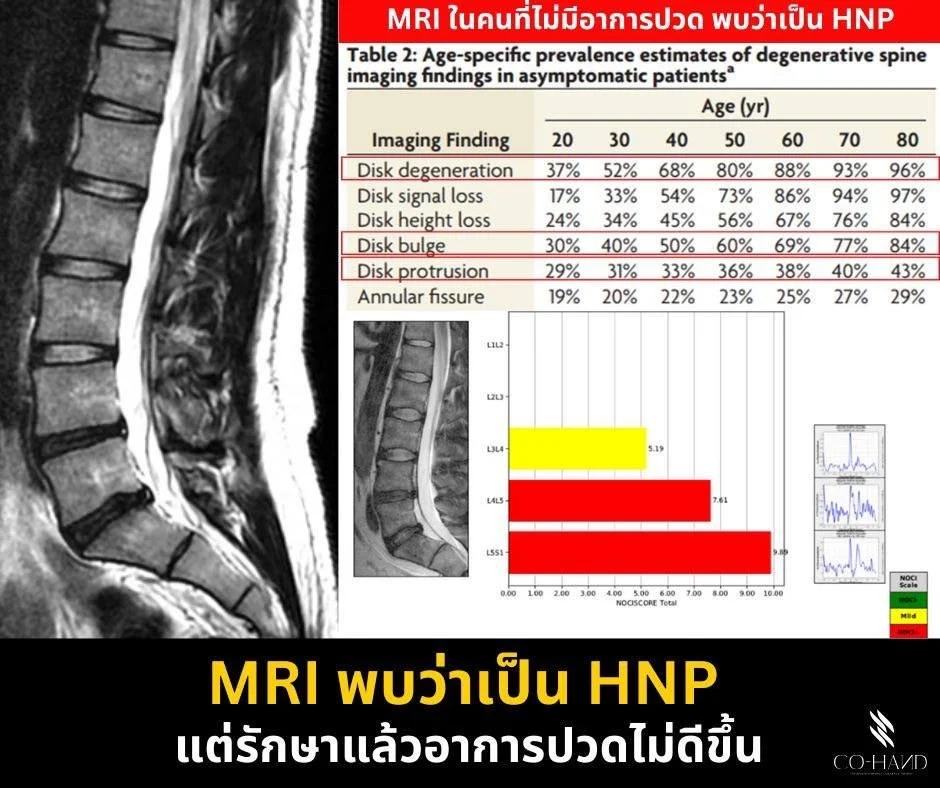
  • An MRI scan of the lumbar spine, showing degenerative disc changes. The image includes a chart with age-related prevalence of disc degeneration, bulging, protrusion, and other spinal findings, indicating increased degeneration with age. The text in Thai mentions MRI findings indicating disc issues but pain symptoms may not improve after treatment.

    Case Study [EP.10]

    MRI พบว่าเป็นหมอนรองปลิ้น แต่รักษาแล้วอาการไม่ดีขึ้น

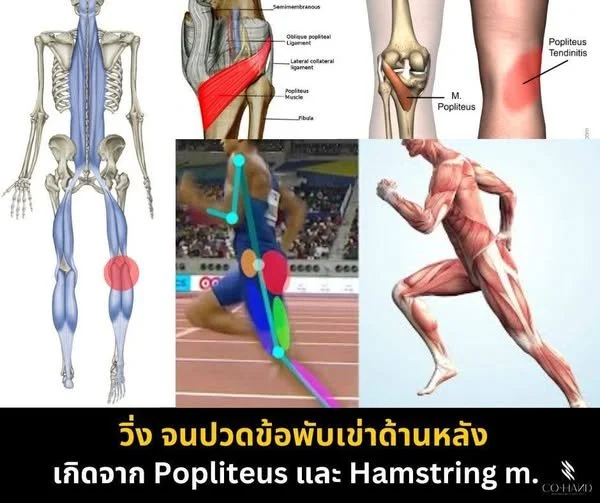
  • Images showing anatomy and injury of the posterior thigh, including the pelvis, quadriceps femoris, hamstring muscles, and common injuries like tendonitis from the popliteus and hamstring. Also depicts a sprinter with highlighted muscle groups affected during running.

    Case Study [EP.11]

    ปวดเข่า ปวดข้อพับเข่าด้านหลังจากการวิ่ง

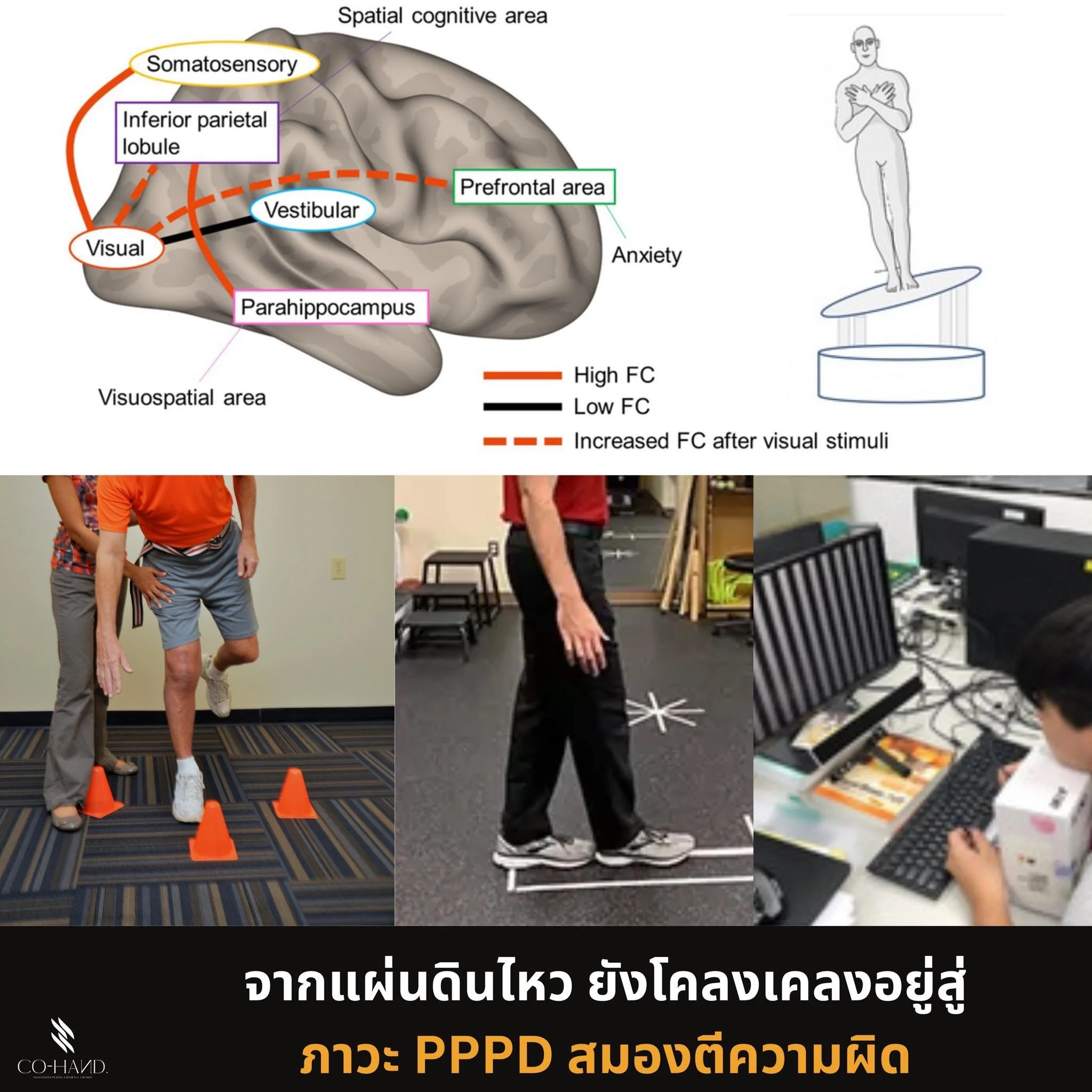
  • A diagram of the brain highlighting areas involved in visual processing, somatosensory, prefrontal, and parahippocampus, with increased functional connectivity after visual stimuli. Below are three photos showing a person performing balance exercises, walking in a line, and working on a computer, with a caption in Thai about the effects of visual motion and the brain's response.

    Case Study [EP.12]

    เมื่อ “แผ่นดินไหว” ผ่านไป แต่ยังเวียนหัวอยู่

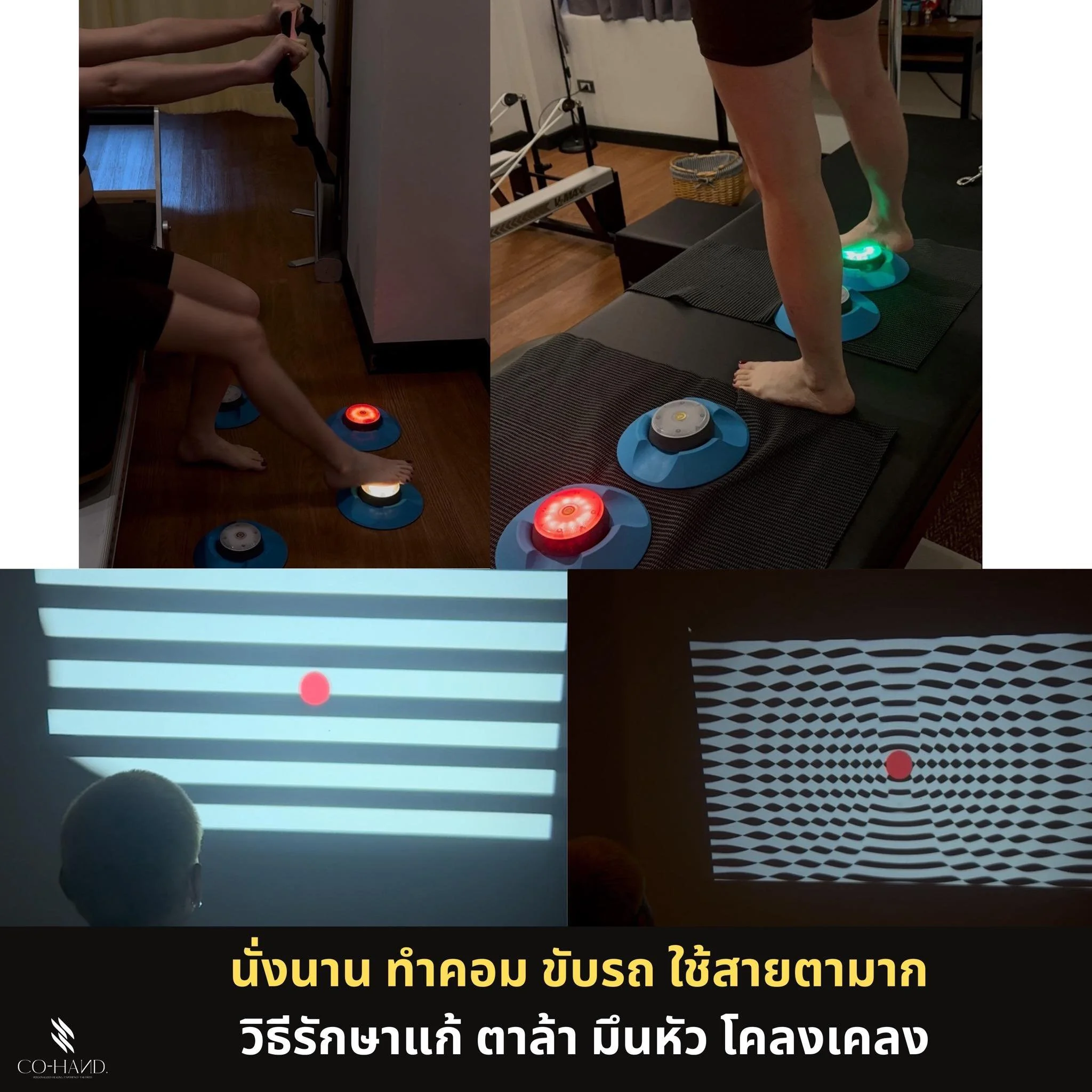
  • A collage of four images showing different methods of vision therapy: using lighted platform with sensors for balancing exercises, projecting visual patterns on a screen for visual perception training, and students lying or standing on equipment for eye exercises, with Thai text and a CO-HAVD logo at the bottom.

    Case Study [EP.13]

    เวียนหัวจากการใช้สายตามากเกินไป

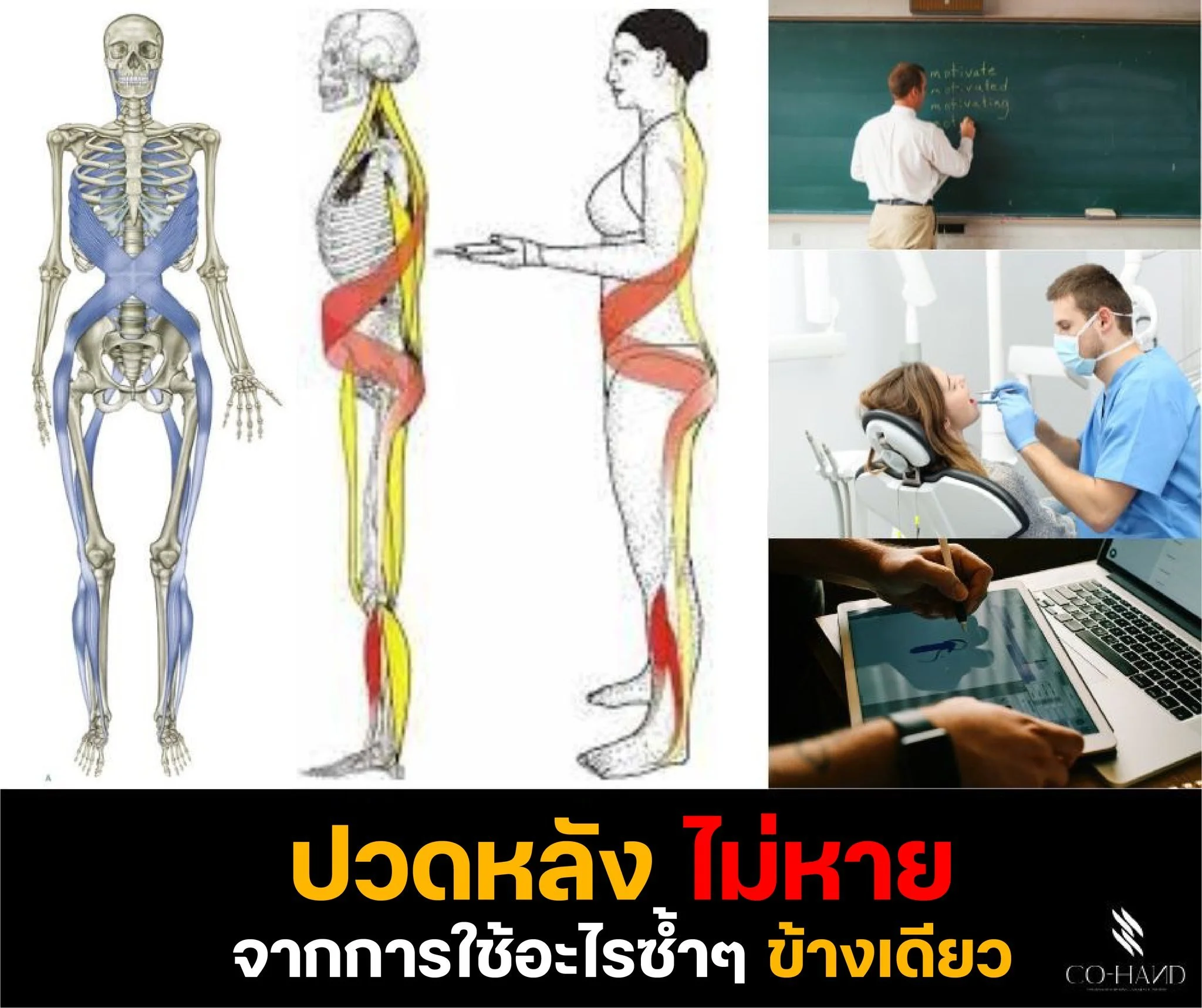
  • A collage showing human skeletal and muscular anatomy diagrams, a teacher writing on a blackboard, a dentist treating a patient, and a person drawing on a digital tablet with a laptop nearby. The text in Thai indicates back pain from repetitive use.

    Case Study [EP.14]

    ใช้แขนข้างเดียว จนร่างกายเอียงไม่รู้ตัว

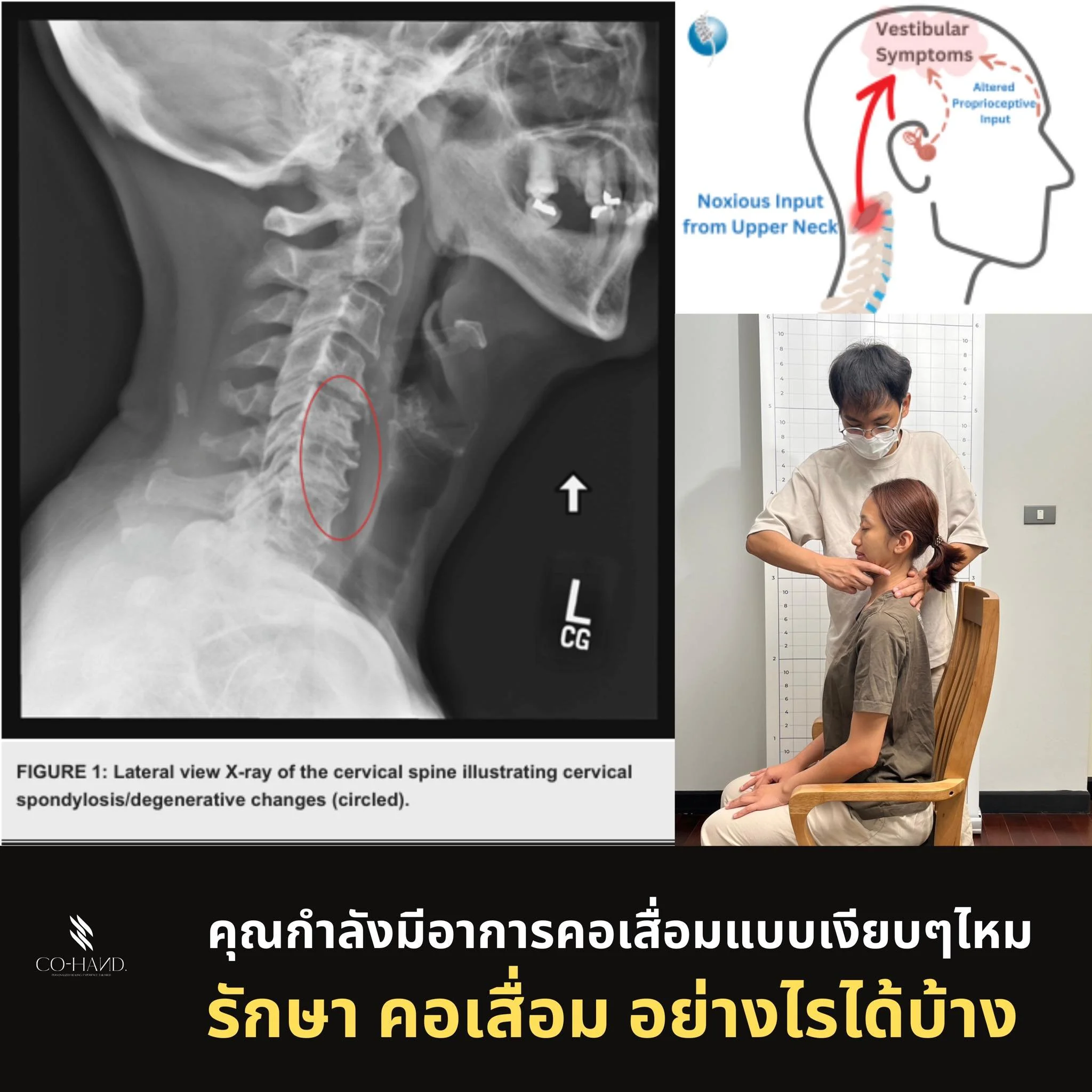
  • Lateral X-ray of the cervical spine showing cervical spondylosis with degenerative changes, highlighted within a red circle. Additionally, a medical diagram illustrates the pathway of noxious input from the upper neck leading to vestibular symptoms. A healthcare professional examines a seated female patient during a clinical assessment.

    Case Study [EP.15]

    อาการ“คอเสื่อม” ไม่ใช่แค่ปวดคอ…